

Genoa (GE)

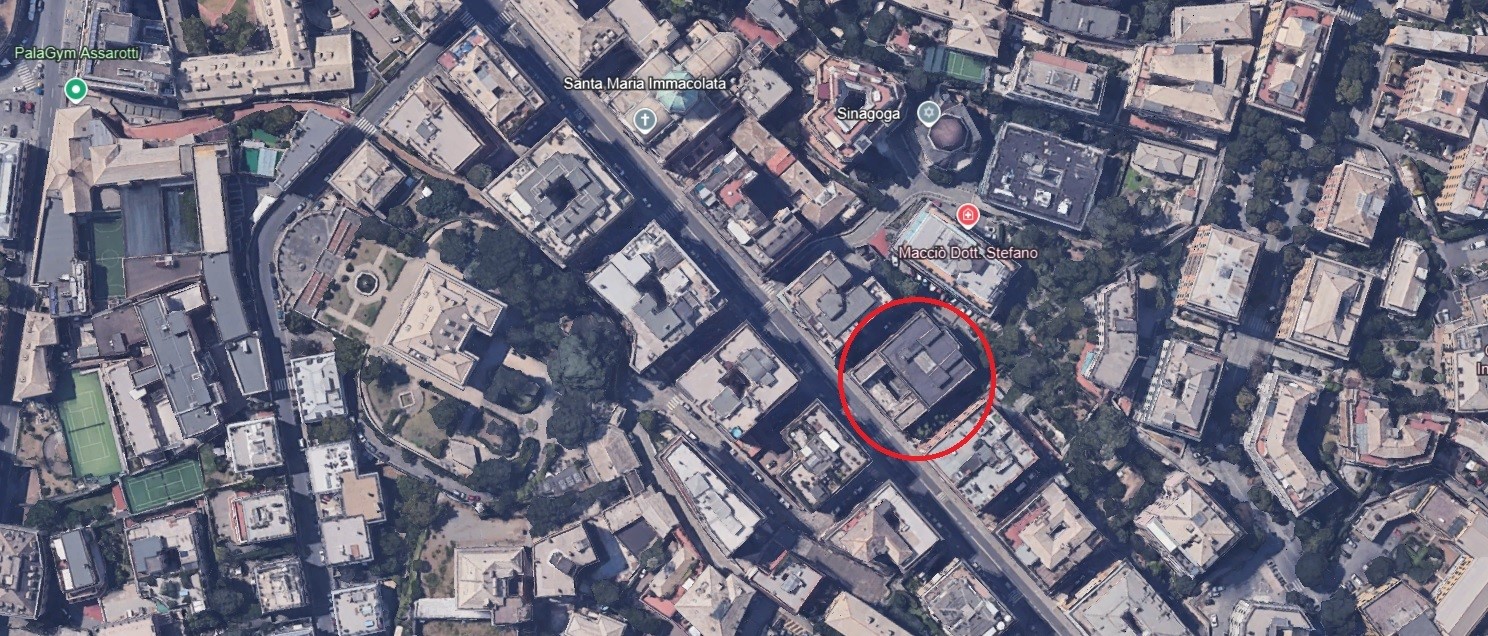
Via Assarotti 40

Total area (in sqm) 2.582
Ownership Public
Acquisition Purchase

DESCRIPTION

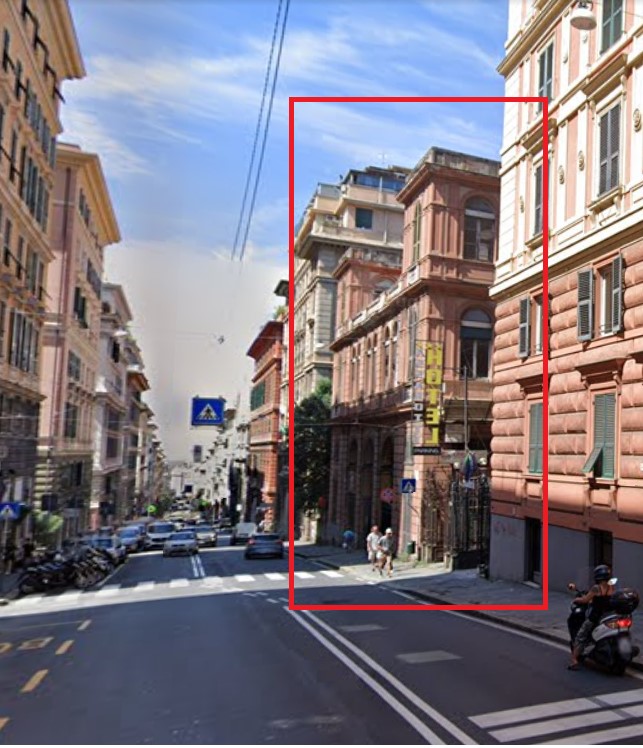
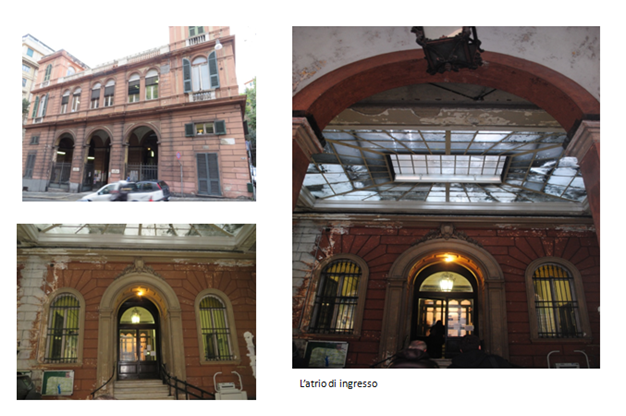
The property is a prestigious building located in the center of Genoa along the wide straight stretch of Via Assarotti. Built around 1860, it took on its current name of Palazzo Celesia in 1870 when it was purchased by Domenico Celesia, a Genoese nobleman and prominent figure in Genoese political life.
Until 2014, it was the headquarters of the Genoa Education Authority.
It is located in the center of Genoa, near the central Piazza Corvetto, and is connected to the main public transport links.
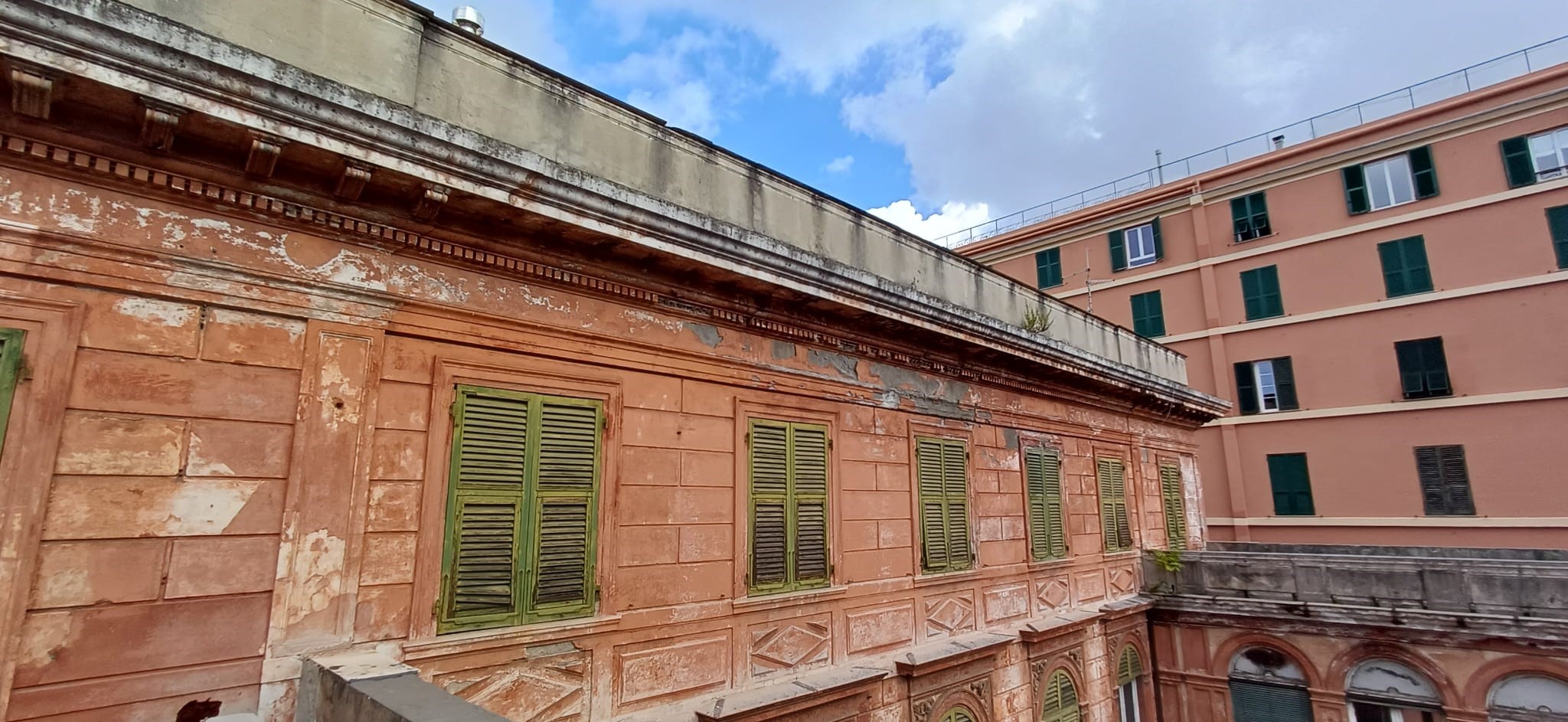
The building is a single structure, with three floors above the ground floor and mezzanine, and has a square layout with light wells and intermediate terraces.
The roof is flat and there are four technical rooms: one is the access to the roof, one is the elevator shaft, and the other two contain the water tanks.
Access is Via Assarotti, through a three-bay vaulted portico, which leads to the courtyard, once open-air, now covered with a skylight. From the courtyard, you can access both the building and the rooms located in the side wings on the ground floor, which have independent access. 

The total surface area of the property is 3,343.71 square meters, divided as follows:

  • Ground floor and basement: 736.58 square meters (including 181.14 square meters of portico)
  • Mezzanine floor: 127.95 square meters
  • First floor: 647.87 square meters
  • Second floor: 674.16 square meters (of which 121.10 square meters is terrace)
  • Third floor: 573.83 square meters (of which 104.4 square meters is terraces)
  • Roof: 583.32 square meters (of which 520.48 square meters is terrace).

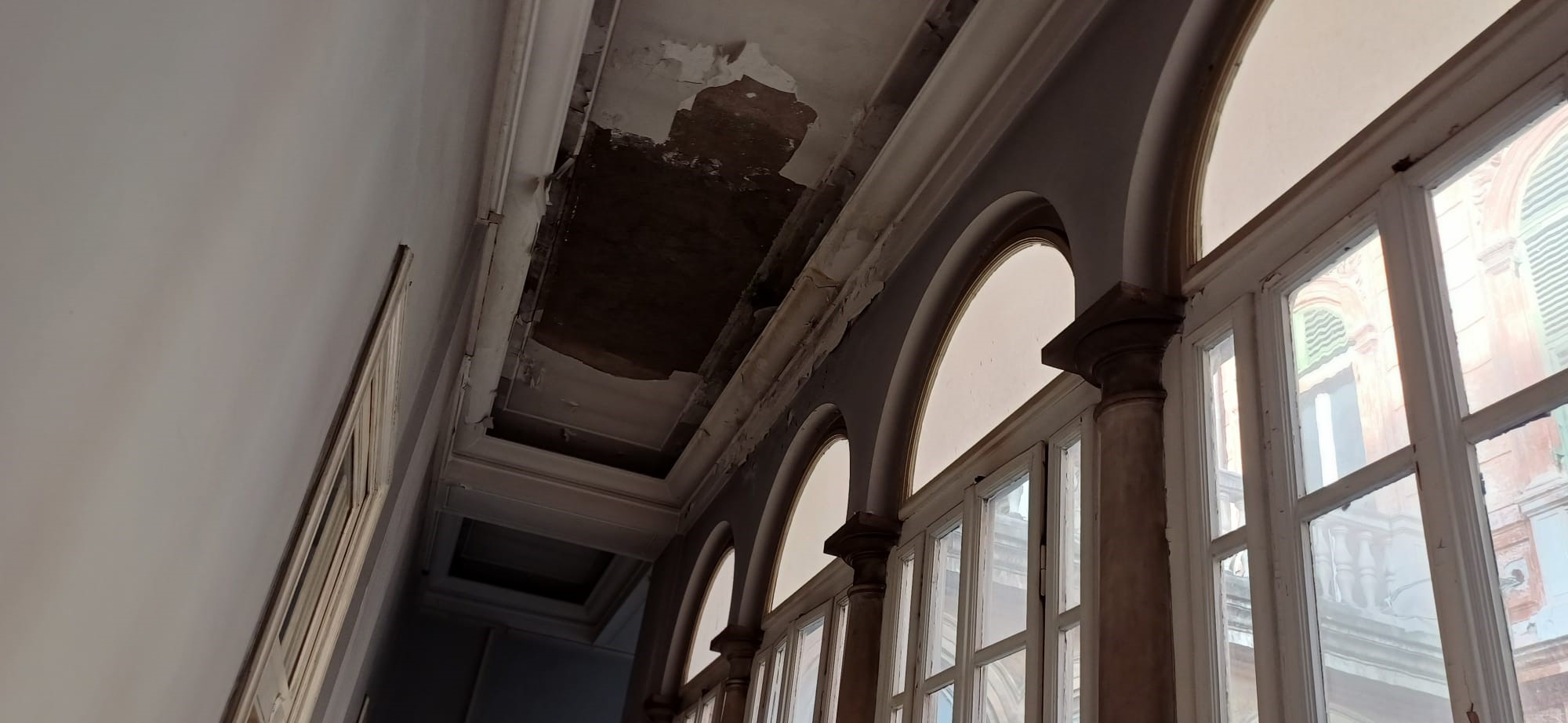
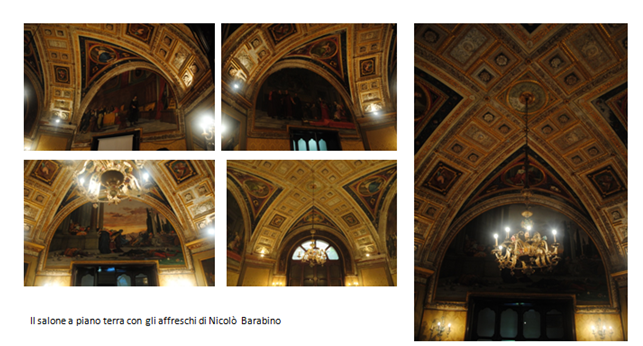
In particular, the covered area is 2,416.59 sq m. The building has a reception hall on the ground floor – measuring approximately 89 sq m – with frescoes by Nicolò Barabino (Galileo before the Inquisition Tribunal; Pier Capponi tearing up the Capitoli before Charles VIII and the Sicilian Vespers), two rooms with frescoed ceilings on the first floor and a meeting room with wood paneling on the walls.
The property overlooks Via Assarotti, an important two-way street in the center of Genoa (Piazza Corvetto). The main use of the area is residential, with a significant presence of service industries (professional offices).
The city center (Piazza De Ferrari, Via Roma, Via XX Settembre) can be reached in a few minutes on foot. public transport stops, which connect to all areas of the city, are located less than 20 meters from the building's entrance.
The Genoa Brignole railway station is also a 10-minute walk away. The second central station, Porta Principe, can be reached in about 5 minutes by car or 15 minutes on foot.
As for parking spaces, there are four spaces available in the portico; another six spaces can be created in the area surrounding the building on the west side.
Internally, the building has a layout generated by the position of the load-bearing walls and the stairwell, which is repeated on all four levels. There are two stairwells: the main staircase is located in the northern part of the building and has three flights, with a large central void where the elevator has been installed; the secondary staircase is located on the opposite side of the building and is almost spiral in shape.
The main stairwell leads to a large blind distribution corridor on each floor, connecting the various parts of each level.
The bathrooms are located on either side of the central stairwell on all levels, except for the ground floor.

CHARACTERISTICS

Number of buildings comprising the covered areas:
1
Total covered/uncovered area (sqm):
2582
Any residual covered areas:
NO
Total volume (cubic metres):
13060
Building permit in place:
NO
Intended use of the buildings:
The permitted uses are: Main functions: Public services, residences, hotel accommodation, private services, offices, neighborhood businesses, and medium-sized retail outlets, excluding urban connectors: multipurpose gaming rooms, betting shops, bingo halls, and similar establishments. Complementary functions: Warehouses The relevant COMPLIANCE RULES - URBAN PLANNING AND BUILDING REGULATIONS stipulate that "all interventions for the conservation of existing buildings are permitted, up to and including building renovation, without the obligation to provide parking spaces. Volumetric expansion of existing buildings is permitted, within 20% of the existing geometric volume, with an increase in the existing floor area within the limit of 20%. Interventions on the existing building heritage must be carried out according to the following guidelines: - pursue the maintenance and enhancement of the architectural, typological, and historical-environmental characteristics of the building, its surroundings, open and green spaces, and pedestrian and historical paths, restoring the historical formal characteristics of buildings if they have been altered (e.g., through the replacement of roofing, the use of synthetic plaster, etc.); - Where restoration is impossible and reconstruction is necessary, architectural solutions must be adopted that enhance the intervention while respecting the use of traditional materials and technologies, without prejudice to the possibility of using innovative materials and technologies aimed at energy saving and the production of energy from renewable sources and the improvement of the urban and architectural image of the city. - Permitted modifications and increases in surface area must be organically connected to the existing building, in particular by unifying the roof and alignments, avoiding the formation of superfluous additions. - For interventions relating to historic villas and buildings of particular architectural value, the project must, in principle, cover the entire property and its appurtenant areas. - the works must be linked to the redevelopment of the surrounding areas, with the aim of creating a coherent green space design; valuable tall trees must be preserved on site and duly protected from construction activities and, where possible, new tall trees must be planted with adequate perimeter protection; - Volume increases involving the addition of extra floors must preserve the architectural characteristics of the building itself, harmonizing the extension with the surrounding buildings. In the case of buildings with obvious alterations to their volume, the extension must be an opportunity for overall reorganization and improvement through a project covering the entire building. - Where the alignment of building heights is a defining feature of the urban landscape, any raising of the roof must preserve the value of the image by providing appropriate architectural solutions. - In renovation projects, any superfluous additions must be subject to contextual interventions for their recomposition, without prejudice to the possibility of their removal. - Photovoltaic and solar thermal panels may be installed on historic buildings with pitched roofs exclusively through solutions integrated with the roof covering, excluding water storage tanks. The property is subject to monument restrictions pursuant to Law 364/1909, defined by the provision dated February 8, 1934, whereby interventions (of a voluntary conservation nature) are subject to prior authorization by the competent Superintendency of Fine Arts and Landscape of Liguria./dd>
Previous use of the industrial asset:
The building in question was the headquarters of the Education Authority until 2014, when it was completely transferred to the adjacent building at number 38.
Area in Simplified Logistics Zone:
NO
Area in the Customs Free Zone:
NO
Area in industrial crisis:
NO
Need for remediation:
NO
Need for renovation:
NO
Presence of electrical substation:
NO
Gas network connection available:
NO
Connection to the municipal wastewater management system:
NO
Fibre optic connection:
NO

ACCESS

Distance to nearest motorway (Km):
3 Km
Distance to nearest passenger railway station (Km):
1 Km
Distance to the nearest industrial/commercial port (Km):
5 Km
Distance to nearest airport (Km):
9 Km
Distance to the nearest freight railway terminal (Km):
Terminal San Giorgio – 5 Km; Rail Hub Europe – Rivalta Scrivia 75 Km

DOCUMENTS

Floor plans

Are you interested in this asset?

Contact the owner